
Deschutes County Arrest Records and Charges
Deschutes County arrest records start on the law-enforcement side. A sheriff, police officer, or other agency may create an arrest-related record, and the Deschutes County Sheriff's Office keeps jail and custody information for people held at the Adult Jail. The current jail roster is a custody snapshot. It may show a person's name, offense information, and current custody status, but it is not the full court file and does not prove guilt.
Court charge records begin when the prosecutor decides what formal charges to file. In Deschutes County, the Deschutes County District Attorney prosecutes many criminal matters and files or pursues the charges that move into Circuit Court. Those charges can later be amended, reduced, dismissed, or resolved by plea, verdict, diversion, or sentence. For booking and custody detail, use inmate records. For the full criminal case file, hearings, pleas, and sentence, use criminal court records.
The Oregon DOC offender search is a different system. It is useful for sentenced state-prison offender information, not for every local arrest in Deschutes County. The DOC also explains that certified or official offender records require a public records request through the agency, so the online search should be treated as an index, not as a court-certified charge history.
Charges Filed After Arrest
After an arrest, the charging path turns on what the prosecutor files and what the court accepts into the case register. A person may be booked on one offense description, then face different formal charges after review by the District Attorney. Oregon court records may include a complaint, information, indictment, plea, release agreement, warrant history, motions, hearing events, disposition, sentence, fines, fees, probation terms, and restitution.
The image below comes from the Oregon Department of Corrections offender search information page, a state source that helps separate local charges from sentenced state-prison records.
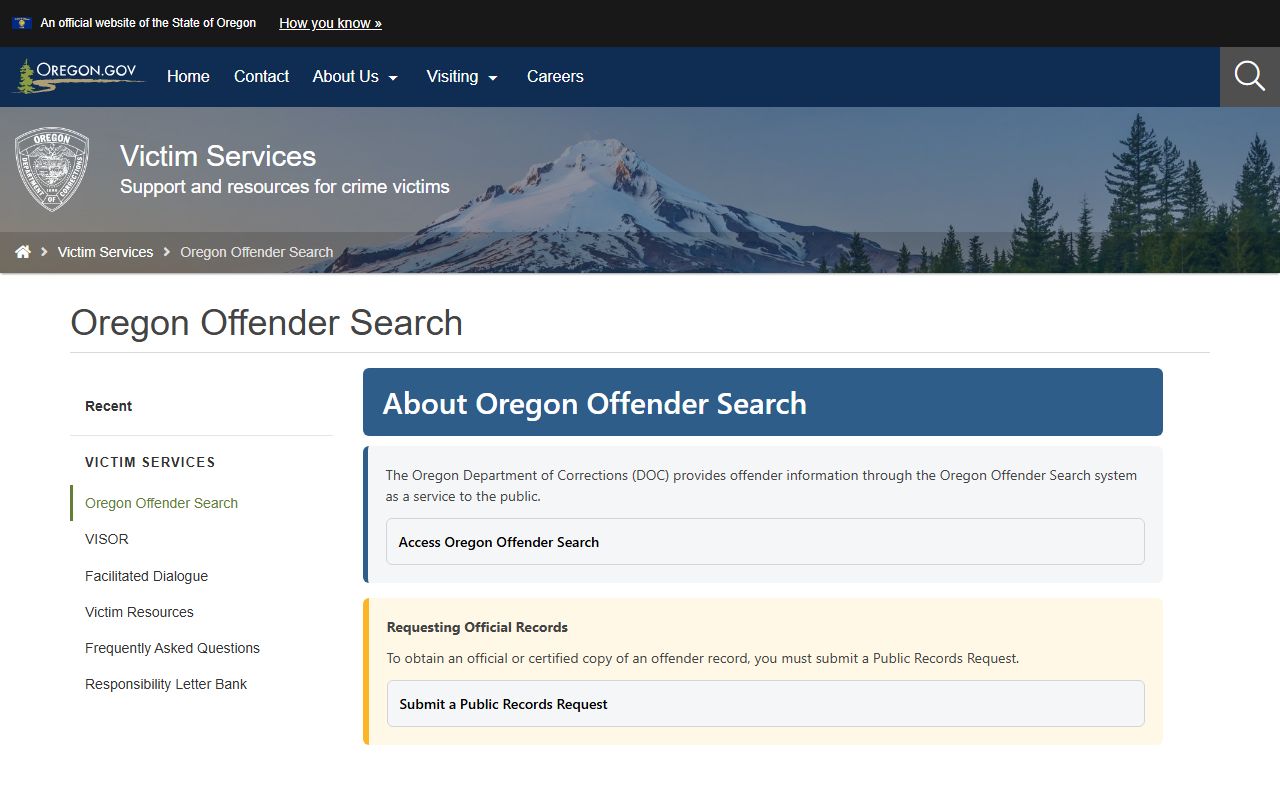
Use DOC results only when the person has moved into state correctional custody or supervision; Deschutes County court charges still need to be checked through court, prosecutor, or sheriff channels.
| Document | Who Uses It | What It Starts | How to Read It |
|---|---|---|---|
| Complaint | Prosecutor or law-enforcement based filing | Often the first criminal or violation charge filing | Look for the charge name, statute, date, and count number. |
| Information | District Attorney | A prosecutor-filed criminal case or later amended charges | Compare it with prior charges to see added, reduced, or amended counts. |
| Indictment | Grand jury process | Felony charges returned after grand-jury review | Read each count separately because one arrest can create several counts. |
Search Deschutes County Charges
Start by identifying which record type is needed. A same-day custody question belongs with the jail roster or jail phone line. A filed charge belongs with the Circuit Court criminal case register. A police report, body-camera item, or other sheriff record may require the Sheriff's public records request, subject to exemptions for active investigations, medical information, personnel matters, concealed handgun license material, and other protected records.
- Check the jail roster first if the question is whether someone is in current Deschutes County custody.
- Search the court case record by defendant name or case number when charges have been filed in Circuit Court.
- Review each count rather than relying on the first charge listed.
- Compare later docket events for amended, reduced, dismissed, or sentenced charges.
- Request official copies from the court or agency custodian when a certified record is needed.
The public-records path depends on custody. Circuit Court cases, including criminal convictions and charge dispositions, belong with the Oregon Judicial Department and Deschutes County Circuit Court. County administrative records belong with county offices. Sheriff's custody, booking, police-report, and body-camera records go through the Sheriff's request process.
Deschutes County Charge Status
Charge status can change more than once. A charge may be filed, replaced by a different charge, dismissed after review, or resolved through a plea or trial. A court register can also show warrant events, continuances, payment events, sentencing, probation, and collection status. The status terms below help separate the accusation from the later outcome.
| Status | What It Means | Where It May Appear |
|---|---|---|
| Pending | The charge has been filed and has not reached final disposition. | Circuit Court register, hearing notices, or prosecutor filings. |
| Amended | The wording, statute, level, or count has changed. | Amended complaint, information, indictment, or docket event. |
| Reduced | The case moved from a more serious charge to a lesser offense. | Plea documents, amended charge entry, or disposition field. |
| Dismissed | The charge was ended by court order or prosecutor action. | Judgment, docket event, or disposition line. |
| Set aside | Eligible arrest, charge, or conviction access may be restricted under Oregon law. | Court order under ORS 137.225 and agency updates. |
The Oregon State Police public sex offender registry is another separate record source. It is tied to public-notification sex offender records, not to every arrest or court charge in Deschutes County.
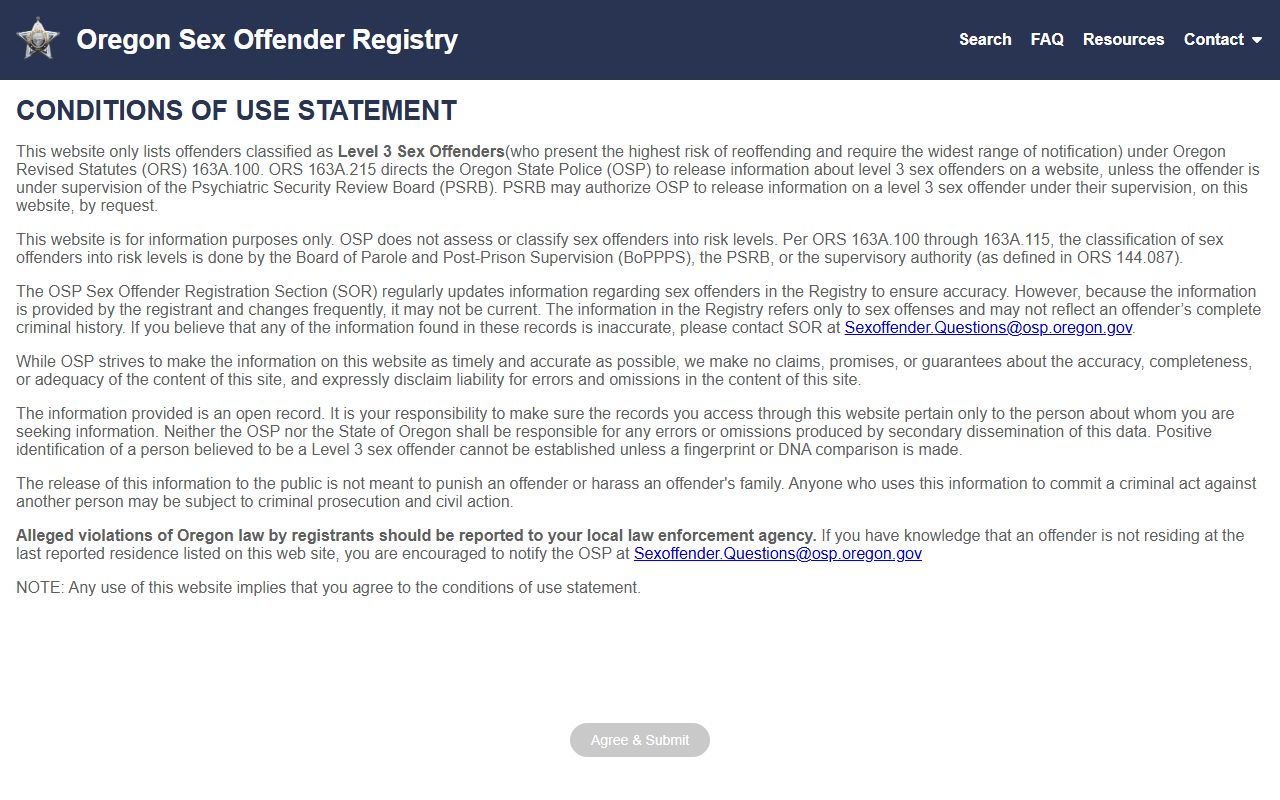
Registry records should be read as a state public-notification source and not as a substitute for the underlying Deschutes County criminal case record.
Charges vs Convictions
A charge is an accusation filed or pursued by the government. A conviction is a finding or plea of guilt. Deschutes County arrest records can show offense information before the court reaches an outcome, so a booking or charge entry should not be read as proof that the person was convicted. The court record is the best place to confirm disposition and sentence.
| Point of Comparison | Charge | Conviction |
|---|---|---|
| Basic meaning | Formal accusation after arrest or citation. | Guilty plea, no-contest result treated by the court, or trial verdict. |
| Record location | Charging document, jail offense information, or case register. | Judgment, sentence, disposition, and criminal history. |
| Can change | Yes. Counts may be amended, reduced, added, or dismissed. | Only changes through appeal, post-conviction relief, reconsideration, or set-aside order. |
| Use in background review | Needs context and current status. | Still must be checked against restrictions and set-aside orders. |
Restricted Deschutes County Arrest Records
Oregon public access starts with the rule that public records are open unless an exemption applies. ORS 192.314 gives a right to inspect public records, while ORS 192.345 and ORS 192.355 provide conditional and absolute exemptions. For court records, ORS 7.020 requires the court register to track filings and events, but confidential material may still be redacted or withheld.
Restricted categories include juvenile matters, adoption records, mental-health proceedings, VAWA-protected records, sealed records, and set-aside criminal records. Sheriff's records may also be limited when they involve active investigations, body-camera restrictions, medical information, personnel investigations, or concealed handgun license material.
The Oregon State Police sex offender registration program explains state-level sex offender registration resources.
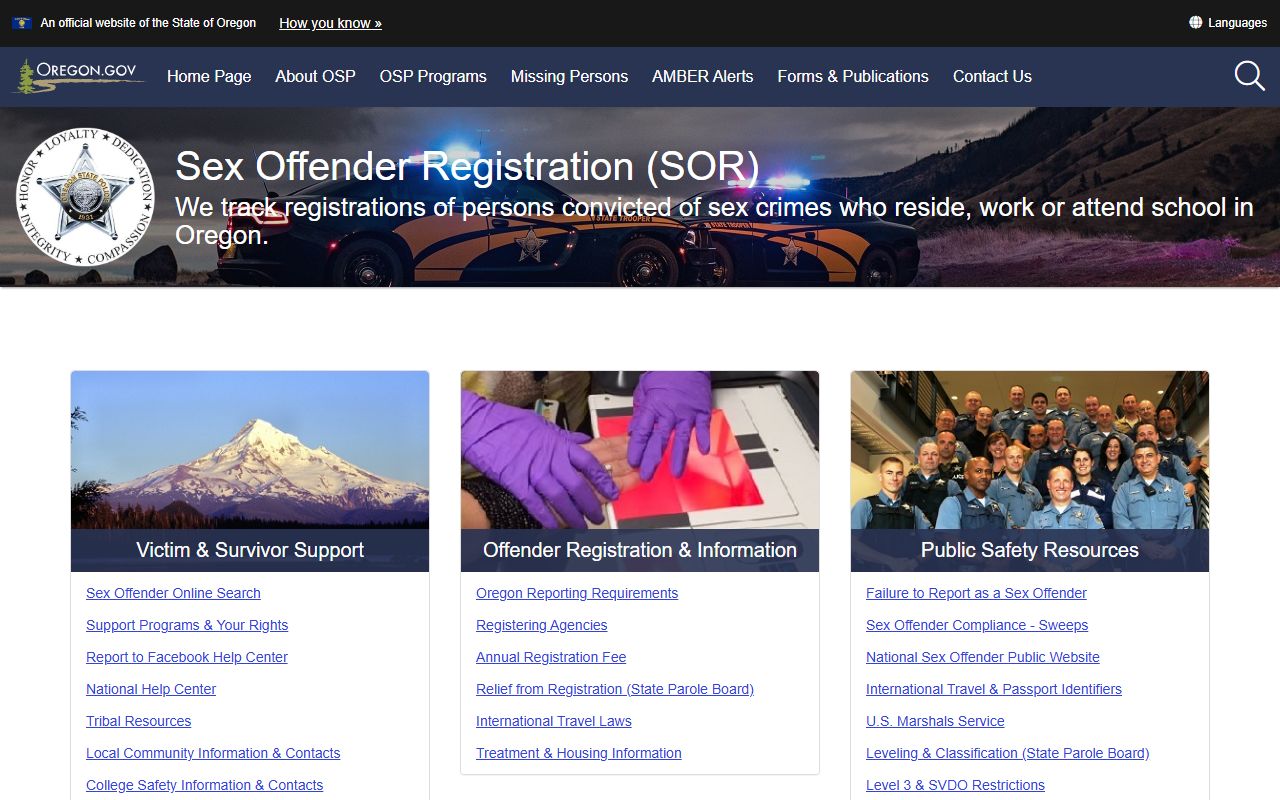
Use that state program for registry-specific questions, then return to the court record when the issue is the original charge, plea, disposition, or sentence.
Set Aside Arrests and Charges
Oregon often uses the term set aside instead of expungement. Under ORS 137.225, eligible arrests, charges, and convictions may be restricted after a court order. The process usually starts in the court where the case or arrest-related record exists. Eligibility depends on the offense, outcome, waiting period, sentence completion, and unpaid financial obligations.
An applicant usually files a motion and supporting documents, the prosecutor receives notice, and a judge decides whether the record qualifies. The District Attorney site includes an Expungements resource link, and Deschutes County users can check Circuit Court filing requirements for the exact court process. A successful order changes official public access, but it does not erase every private copy, news reference, or record held outside the order.
The Oregon DOC offender search is one place where state custody status may need to be checked after a sentence.
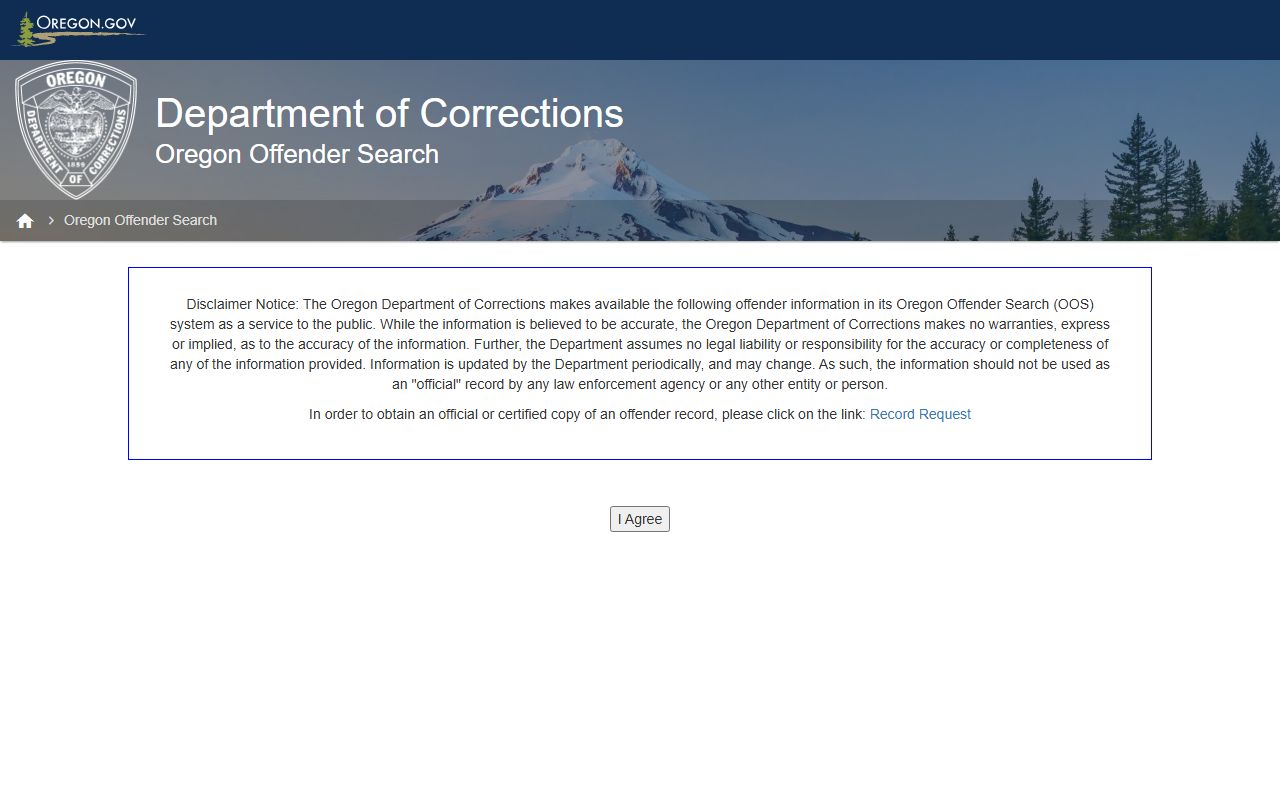
When a Deschutes County charge has been set aside, verify the court order and the custodian update rather than relying only on a public search screen.
District Attorney Charge Review
The Deschutes County District Attorney's Office is a key source for understanding court charges after arrest because the prosecutor decides how a criminal accusation is pursued. The office lists District Attorney Steve Gunnels, public-records request links, victim services, protective-order information, conviction reconsideration, expungements, and a data dashboard. The office is separate from the court clerk and does not serve as a general court-record search counter.
Deschutes County District Attorney
1160 NW Bond St.
Bend, OR 97703
541-388-6520
INFO@DCDA.US
For a complete public case history, compare the charging document with the Circuit Court register, any judgment, and the final disposition. For defense referrals, Deschutes Defenders is a public defense nonprofit serving Central Oregon, but it is not the custodian of public court records.
Deschutes County also has local programs that can change the way a charge is resolved. The Circuit Court specialty-courts page identifies Mental Health Court and the Domestic Violence Deferred Sentencing Program. Those programs do not erase the need to read the court record, but they can explain why a charge shows treatment, deferred sentencing, probation supervision, dismissal after completion, or other non-trial events in the register.