
Deschutes County Criminal Court Records
A criminal court record is the case-level record maintained once a prosecution exists in court. In Deschutes County, felony and misdemeanor case files are handled through Deschutes County Circuit Court within Oregon's 11th Judicial District. The court record can include the complaint, information, indictment, plea entries, release terms, warrant activity, motions, hearing events, trial events, disposition, sentence, probation conditions, fines, fees, and restitution. It is different from a jail booking record, which is a custody snapshot, and different from a police report, which may remain restricted during an investigation.
The court hierarchy matters. Oregon Circuit Courts are the general-jurisdiction trial courts, while Deschutes County Justice Court and Bend Municipal Court handle separate local violation streams. The District Attorney files or prosecutes criminal charges, but the court register is the source for court events and outcomes. For a closer look at charging documents and charge status before final outcome, see Deschutes County court charge records.
A source capture from the Deschutes County therapeutic courts page shows local court programs tied to some criminal cases.
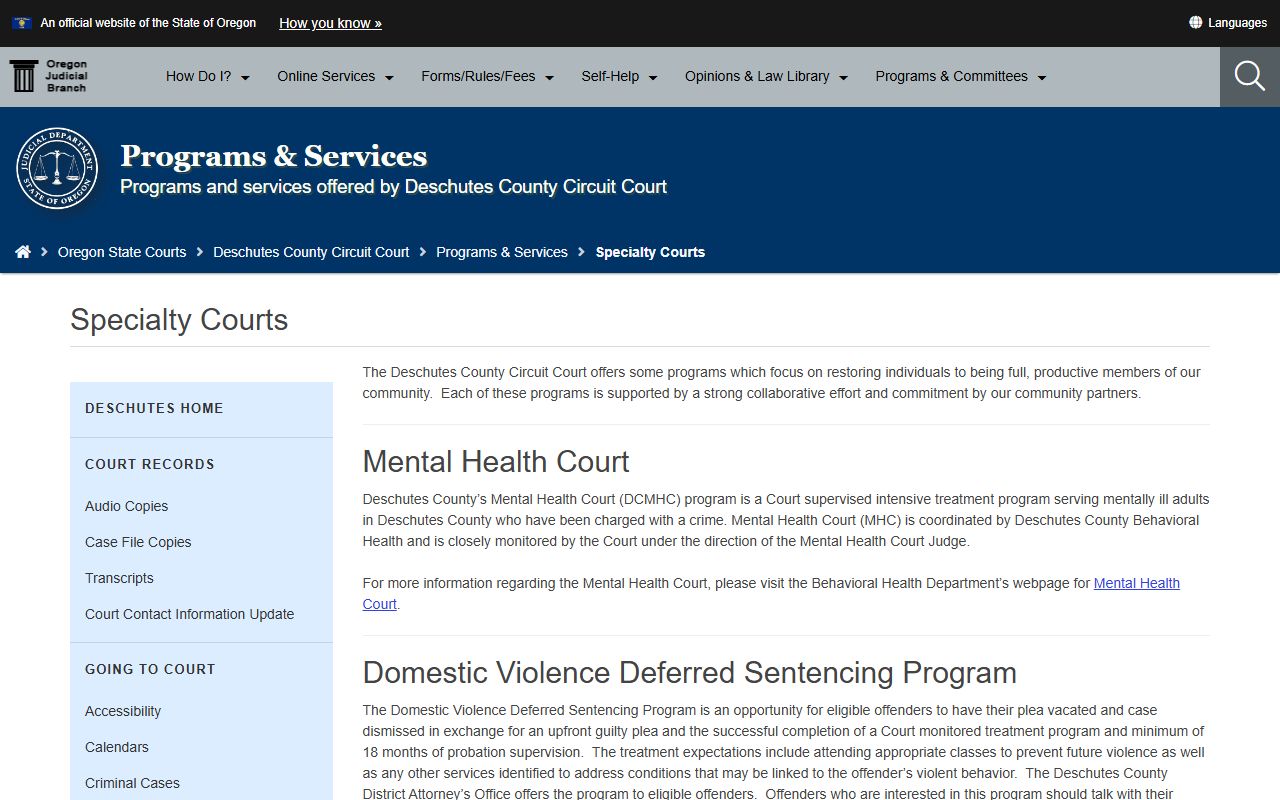
Those programs can affect disposition language in Deschutes County criminal court records, especially when a case involves mental health court or deferred sentencing.
Search Deschutes County Criminal Records
Criminal case lookup begins through the same Oregon Judicial Department record systems used for other circuit court cases. The free OJD records and calendar search can provide basic circuit court case and calendar information. More detailed registers and judgment docket access may require OJCIN Online, which includes OECI for circuit and Tax Court records and ACMS for appellate records. Copies, audio, transcripts, and certified documents route through the Deschutes Circuit Court records process.
- Identify the court on the notice, citation, release agreement, or case document.
- Use OJD's circuit and Tax Court record search for public Deschutes County Circuit Court case information.
- Use OJCIN/OECI if a fuller register, judgment docket, or broader Oregon criminal case search is needed.
- Review the docket for charge entries, pleas, hearing dates, disposition, sentence, warrant events, fines, fees, and restitution.
- Request certified copies, audio, or transcripts from Deschutes County Circuit Court when proof or a filed document is needed.
Statewide criminal history and custody tools are not substitutes for a court case file. Oregon DOC search covers sentenced state-prison offender information. The sheriff's jail roster covers current local custody. The OSP sex offender registry covers only public-notification records such as Level 3 offenders. Deschutes County criminal court records remain the court source for charges filed in court and case outcomes.
Deschutes County Criminal Case Flow
A criminal case record develops in stages. The first court entry may be a charging document, arraignment, release condition, warrant, or hearing notice. Later entries show motions, plea changes, trial settings, dispositions, sentence terms, probation conditions, restitution, and post-judgment activity. Not every case reaches trial. Many cases resolve by plea, dismissal, diversion, deferred sentencing, or other disposition.
Case flow: Charges Filed › Arraignment › Pretrial and Motions › Plea or Trial › Disposition › Sentencing
| Stage | What Happens |
|---|---|
| Charges filed | The prosecutor files or pursues a complaint, information, indictment, or other charging document in court. |
| Arraignment | The defendant hears the charges, receives court dates, and may enter a plea or receive release terms. |
| Pretrial and motions | The docket may show discovery disputes, suppression motions, continuances, negotiations, and hearing settings. |
| Plea or trial | The case resolves through a plea, bench trial, jury trial, dismissal, acquittal, or other court action. |
| Disposition | The record shows the outcome of the case or each charge, such as guilty, dismissed, acquitted, or deferred. |
| Sentencing | The court may enter jail, prison, probation, fines, fees, restitution, treatment, or other conditions. |
Deschutes County Criminal Record Fields
Deschutes County criminal court records should be read field by field. A case number identifies the file. A charge entry identifies an accusation, not always a final result. A disposition shows the result, and a sentence shows the punishment or conditions imposed after conviction or qualifying plea. Financial and custody entries can show bail or security, fines, fees, restitution, payment plans, and collection activity.
| Field | What It Shows |
|---|---|
| Case number | The OJD or court identifier used for search, docket review, and copy requests. |
| Defendant | The person charged in the criminal case, subject to redaction rules where applicable. |
| Charging document | The complaint, information, indictment, or amended charge filed in the court case. |
| Arraignment | The first appearance event, plea entry, release condition, and future date when public. |
| Motions and hearings | Requests for court orders, hearing settings, continuances, rulings, and trial events. |
| Disposition | The outcome for the case or count, including guilty, dismissed, acquitted, deferred, or other result. |
| Sentence | Jail, prison, probation, treatment, fines, fees, restitution, or other court-ordered terms. |
| Set-aside or sealed status | Access restrictions if a court order or law limits public inspection. |
Charges vs Convictions
A Deschutes County criminal court record can show charges that did not become convictions. A charge is an accusation filed or pursued in court. A conviction is a finding or plea of guilt. Records may also show dismissed charges, reduced charges, amended counts, acquittals, deferred sentencing, or a plea that is later vacated under a program. The difference is central when reading criminal court records for employment, housing, licensing, family, or immigration concerns.
| Point | Charge | Conviction |
|---|---|---|
| Meaning | An accusation filed by the state or prosecutor | A guilty plea, no contest plea accepted by the court, or guilty finding |
| Where it appears | Charging document, docket, jail offense field, or DA filing | Disposition, judgment, sentence, and criminal history result |
| Can change | Can be amended, reduced, dismissed, or dropped | Can be appealed, set aside if eligible, or affected by later orders |
| How to verify | Read the charge event and later docket entries | Read the disposition and sentencing entry |
The Deschutes County District Attorney is the local prosecutor's office, and its site identifies public records, expungements, conviction reconsideration, victim services, and criminal justice resources.

The DA source helps explain who prosecutes criminal charges, while the court record remains the source for filed events and final disposition.
Read Dispositions And Sentences
Disposition is the outcome of a case or charge. Sentence is the court-ordered consequence after a conviction or qualifying plea. In Deschutes County criminal court records, disposition and sentence entries may be near each other, but they answer different questions. Disposition answers what happened to the charge. Sentence answers what the court ordered after the outcome. Probation, restitution, treatment, jail, prison, fines, fees, and payment status may appear in the case register or judgment materials.
Deschutes County has specialty court context that can affect the wording. The Circuit Court page describes Mental Health Court for eligible adults charged with crimes and a Domestic Violence Deferred Sentencing Program. The DV program may involve an upfront guilty plea, at least 18 months of probation supervision, treatment duties, and possible vacating of the plea and dismissal after successful completion. That means the final docket history may matter more than the first charge entry.
A source capture from Deschutes Defenders shows the local public defense nonprofit relevant to criminal, juvenile, mental health, and family-adjacent defense referrals.
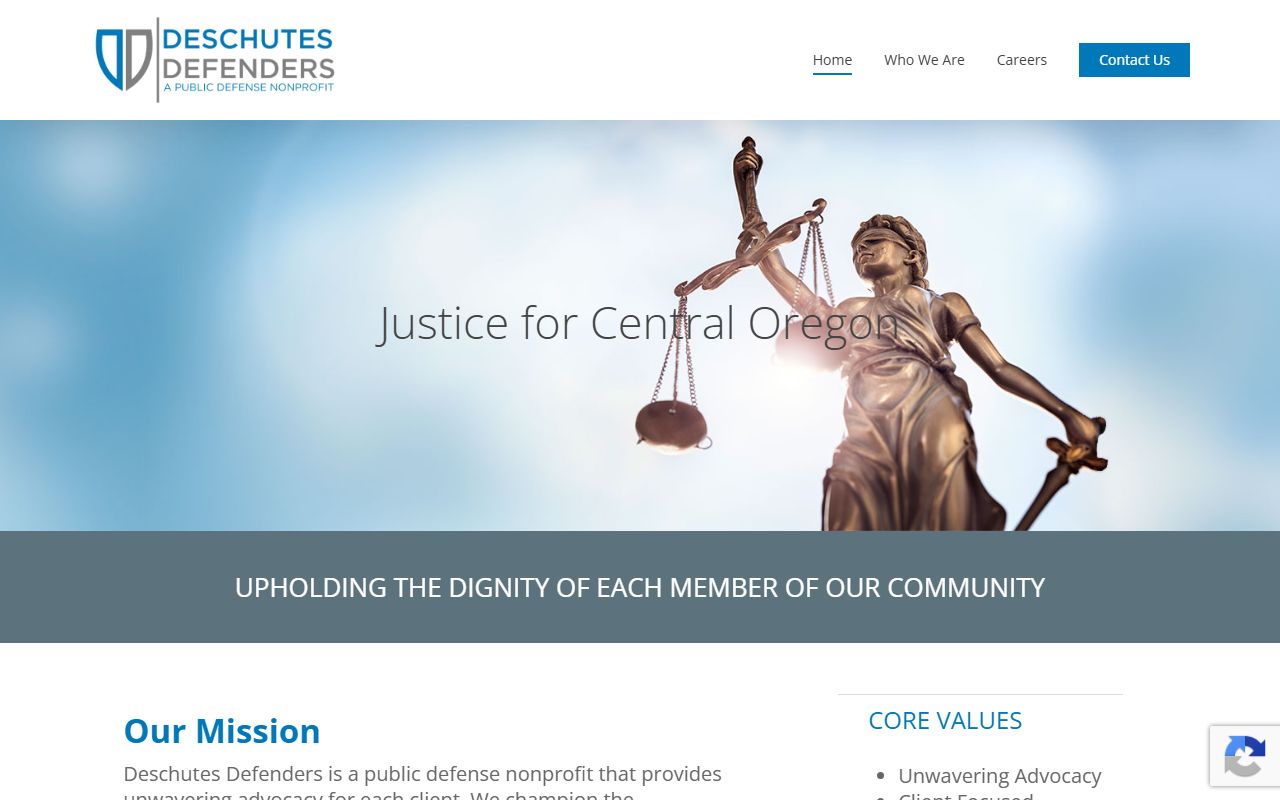
Defense counsel and court records serve different roles: counsel can advise a defendant, while the court register documents filed events and outcomes.
Sealed vs Set Aside
Oregon sources often use the term set aside rather than the looser public term expungement. ORS 137.225 is the practical statute for setting aside eligible arrests, charges, and convictions. The process usually starts in the court where the criminal case or arrest or charge record exists. Eligibility depends on the record type, outcome, waiting period, sentence completion, and financial obligations. The prosecutor receives notice, and a judge decides whether the record qualifies.
| Point | Sealed | Set Aside |
|---|---|---|
| Main effect | Public access is restricted by law or court order | Eligible official records are set aside under Oregon law |
| Common source | Juvenile, adoption, mental health, VAWA, protective, or judge-ordered limits | Eligible criminal arrest, charge, dismissal, acquittal, or conviction records |
| Public view | May be hidden, redacted, or available only to authorized users | Official public access should be restricted according to the order |
| Does it erase everything | No | No, private copies and news references may still exist outside official records |
A source capture from ORS chapter 137 documents the Oregon statute location for set-aside research.
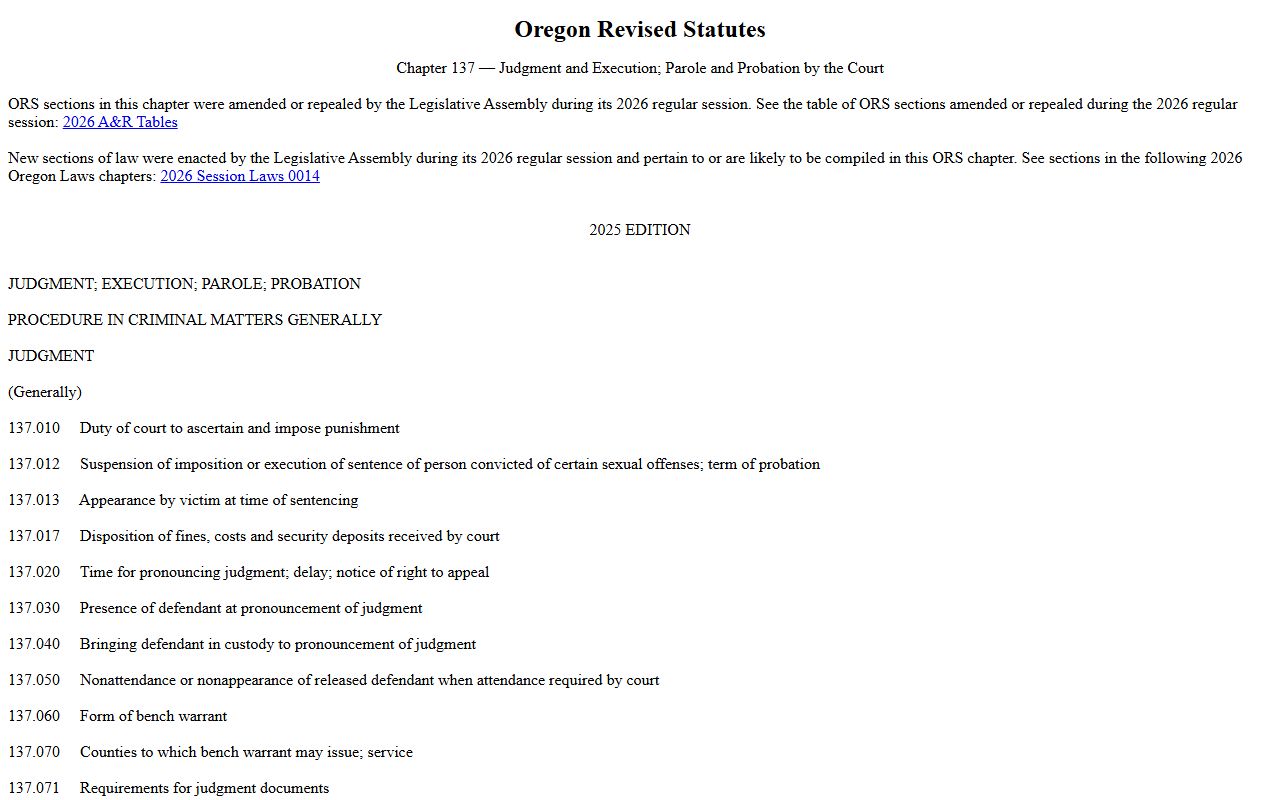
For Deschutes County criminal court records, set-aside analysis should use Oregon's statutory language and the final court order, not just a docket shorthand.
Public Access To Criminal Records
Criminal case access is built on Oregon court record and public record rules. ORS 7.020 requires the court clerk or administrator to maintain a register of actions with filings and events. ORS 192.314 gives inspection rights for public records unless an exemption applies, while ORS 192.345 and ORS 192.355 set out conditional and absolute exemptions. Court records and sheriff records are related but not the same record set.
Key access point: Circuit Court case records, including convictions and criminal case files, route to Deschutes County Circuit Court rather than the county clerk's recording office.
A source capture from Oregon public records law shows the statutory chapter used for public records access and exemptions.
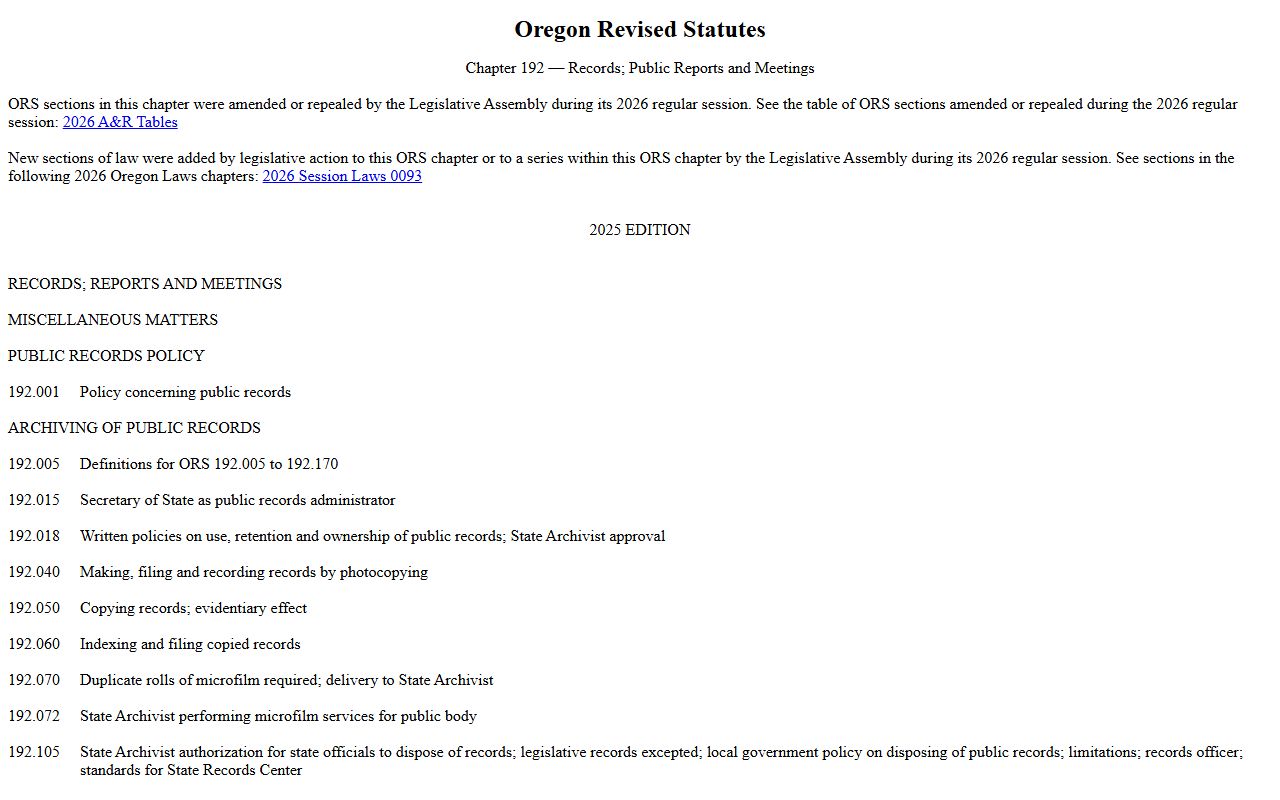
That public records law is part of the access framework, while court-specific register and confidentiality rules control what appears in a criminal case search.
Restricted Deschutes Criminal Records
Public criminal case access has limits. Juvenile records are not generally provided through free OJD public records and calendar search. Mental health proceedings and treatment details may be restricted, even when a related criminal case has public docket entries. Adoption and VAWA-related records can be withheld under law or policy. Sheriff records can also be redacted for medical information, body camera limits, ongoing investigations, personnel investigations, and concealed handgun license information.
A warrant, custody event, or jail offense line is not the full criminal court record. The Deschutes County Sheriff's inmate and warrant-related pages describe custody and jail processes, but the court case file is where pleas, motions, dispositions, and sentences are tracked. For a broader records search across civil, family, probate, and court copy channels, use the Deschutes County court records path.